How to roll out a new menu across multiple locations
Successfully roll out a new menu across multiple locations. Standardize SOPs, ensure FDA compliance, manage staff training, and automate POS updates with AI.
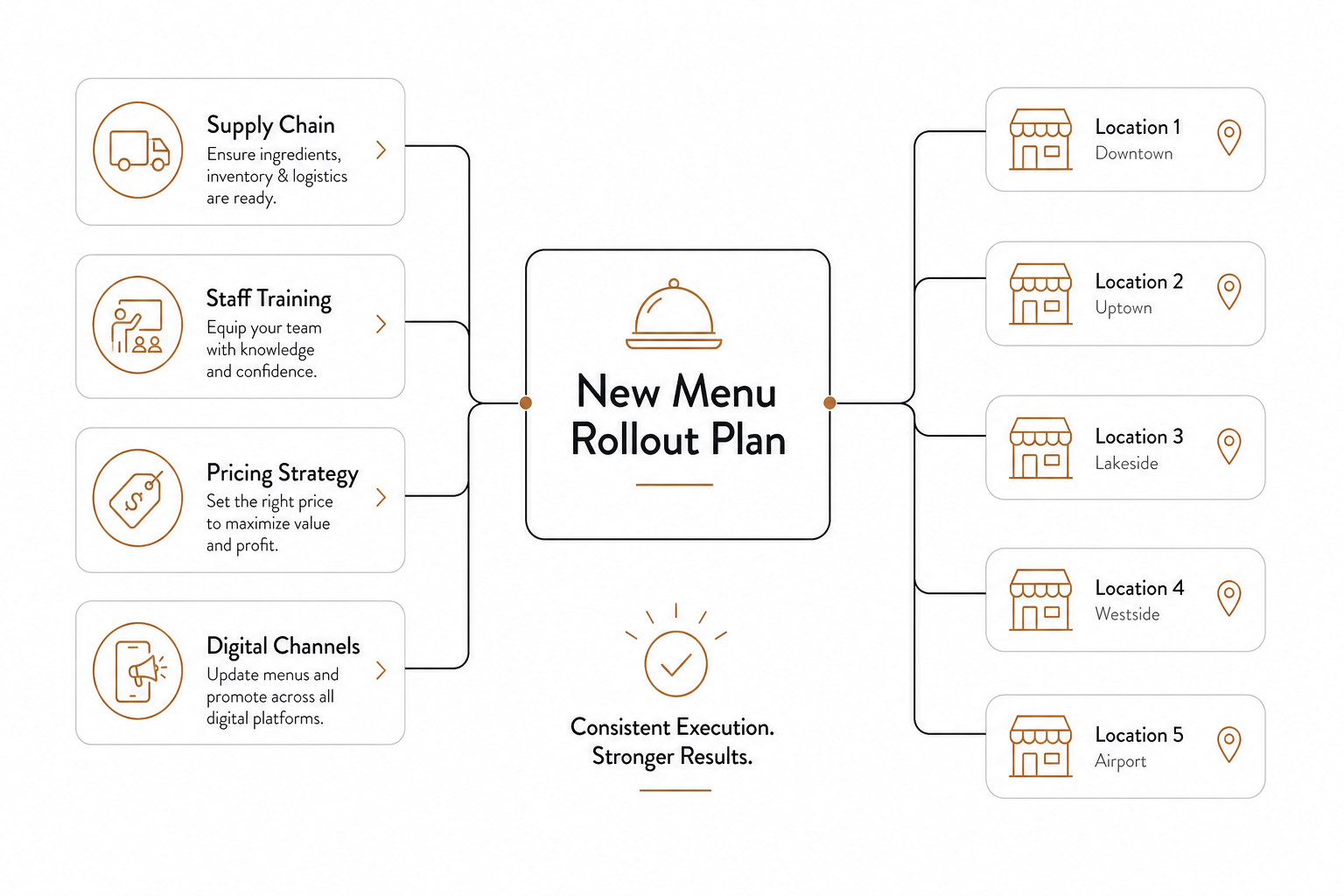
Launching a new menu is one of the most stressful operational hurdles a multi-unit restaurant manager can face. If you run five, twenty, or fifty locations, a single menu change is not just about updating a recipe. It is a complex logistical puzzle involving supply chains, local regulations, staff training, and digital distribution channels.
Without a tight, standardized execution plan, your brand consistency crumbles. A dish might cost $14 in Chicago but $12 in Milwaukee, with completely different plating standards and allergen disclosures. To execute a flawless rollout across your entire footprint, you must coordinate four critical operational areas.
1. Standardize SOPs and food safety protocols
Consistency starts in the kitchen. Before ordering a single new ingredient, you must document and distribute standard operating procedures (SOPs) that map out the exact lifecycle of every new dish. These SOPs act as step-by-step guides so any line cook can replicate the menu items perfectly.
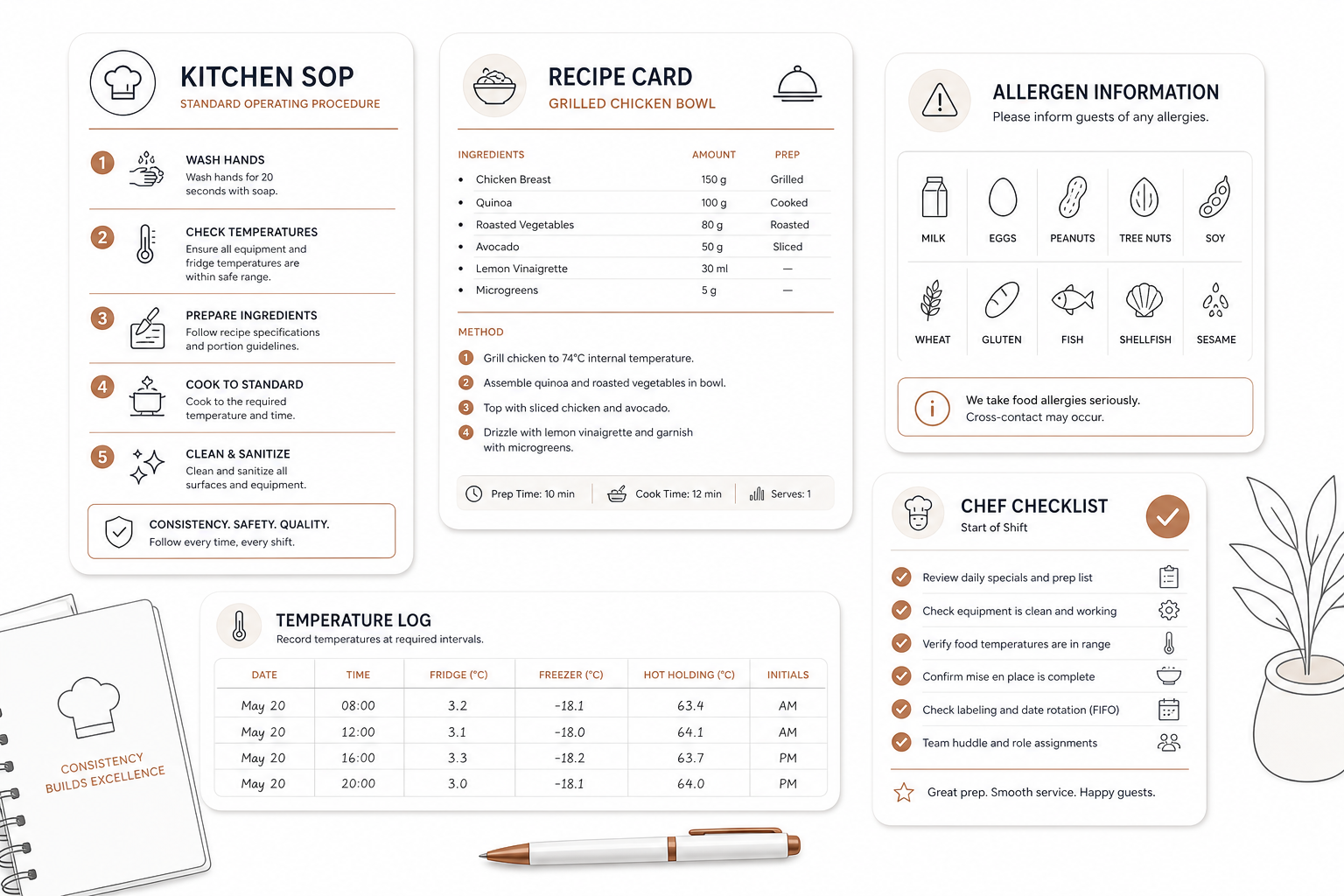
Your procedures must align with the latest FDA Food Code guidelines, focusing heavily on:
- Allergen control and cross-contact prevention: The Food Code requires employees to identify major food allergens and their symptoms. To limit allergen cross-contact, keep allergen-containing ingredients separate, use dedicated equipment or preparation areas, and mandate frequent glove changes and workstation sanitization. If cross-contamination is unavoidable in a shared prep space, you must proactively inform your guests.
- Strict temperature management: The Food Code provides updated regulations on temperature controls. For instance, certain foods are permitted to start at an ambient temperature of 70°F or below for up to four hours, provided they do not exceed that temperature. Your SOPs must define strict monitoring and logging workflows to ensure compliance.
- Front-of-house transparency: Front-of-house staff should proactively ask guests about food allergies, present clear warning signage, and have comprehensive ingredient lists ready on demand.
Keep in mind that SOPs are living documents. You should review them annually and host dedicated employee training sessions whenever you introduce new equipment or update protocols.
2. Maximize menu engineering and legal compliance
Designing your menu layout is a science, not just an aesthetic choice. Strategic design elements can steer customer behavior, boost your margins, and keep you safe from legal risks.
The psychology of item placement
Where you position an item on the page changes everything. Behavioral research shows that moving a menu item from the exact middle of a list to the extreme top or bottom increases its popularity by roughly 55%. Position your highest-margin new dishes at these visual focal points to maximize profitability.
If you want to promote sustainable options, how you frame them matters. Studies indicate that adding environmental impact labels or using menu messages like "small changes, big impact" can double the percentage of plant-based dishes ordered.
FDA menu labeling compliance
If your brand has 20 or more locations operating under the same name and serving substantially the same items, you must adhere to federal FDA menu labeling requirements. Under these regulations, covered establishments must:
- Disclose calorie counts clearly next to standard menu items on physical and digital menu boards.
- Display mandatory guidance statements, such as "2,000 calories a day is used for general nutrition advice, but calorie needs vary."
- Maintain comprehensive, written nutritional documentation on-site for every standard menu item, disclosing total fat, saturated fat, trans fat, cholesterol, sodium, total carbohydrates, dietary fiber, sugars, and protein.
Keep in mind that temporary test items, daily specials, and seasonal dishes are generally exempt from these federal labeling mandates. Establishments can use nutrient databases, laboratory analyses, or cookbooks to determine nutrient content, but they must maintain supporting documentation on-site.
3. Implement structured staff training programs
You cannot expect a kitchen or floor team to execute a new menu seamlessly if they are learning it on the fly. Build a structured restaurant training program that begins at least two weeks before the official launch date. A structured training system boosts compliance, reduces waste, and lowers staff stress.
- Centralize your training materials: Use a single digital platform to distribute recipe cards, plating guides, and video tutorials. This ensures every location receives the exact same instructions and updates.
- Conduct live tastings: Allow your front-of-house staff to taste every new dish. If they do not know what a dish tastes like, they cannot sell it or describe it accurately to guests.
- Run mock shifts: Before the public launch, run dry runs. Have the kitchen prep the new items under pressure, and have the floor staff practice identifying allergens and handling customer modifications.
4. Centralize your POS and digital distribution channels
The biggest headache of a multi-unit launch is updating the technology. You have to update your in-store POS terminals, your online ordering website, your mobile app, and third-party delivery services like DoorDash, UberEats, and Grubhub.
If your managers are logging into multiple platform dashboards to manually change prices and descriptions for every single store, you are asking for data entry errors.
For your core terminal hardware and daily operations, Spindl acts as an all-in-one restaurant management platform. It consolidates order taking, delivery apps, self-service, POS, and loyalty programs into a single device. It is the modern, user-friendly engine your storefronts need to simplify multi-location management and increase profitability.
To orchestrate complex, multi-unit data updates across your entire digital landscape, you can layer on AgenticPOS.
As an MCP server, AgenticPOS connects directly to your existing POS infrastructure and exposes every meaningful restaurant operation – including menu management, pricing, channels, inventory, and analytics – to AI agents. Over 140 agent-callable tools are mapped into the system, meaning you can manage your POS by simply chatting with Claude, ChatGPT, or your own internal copilot.
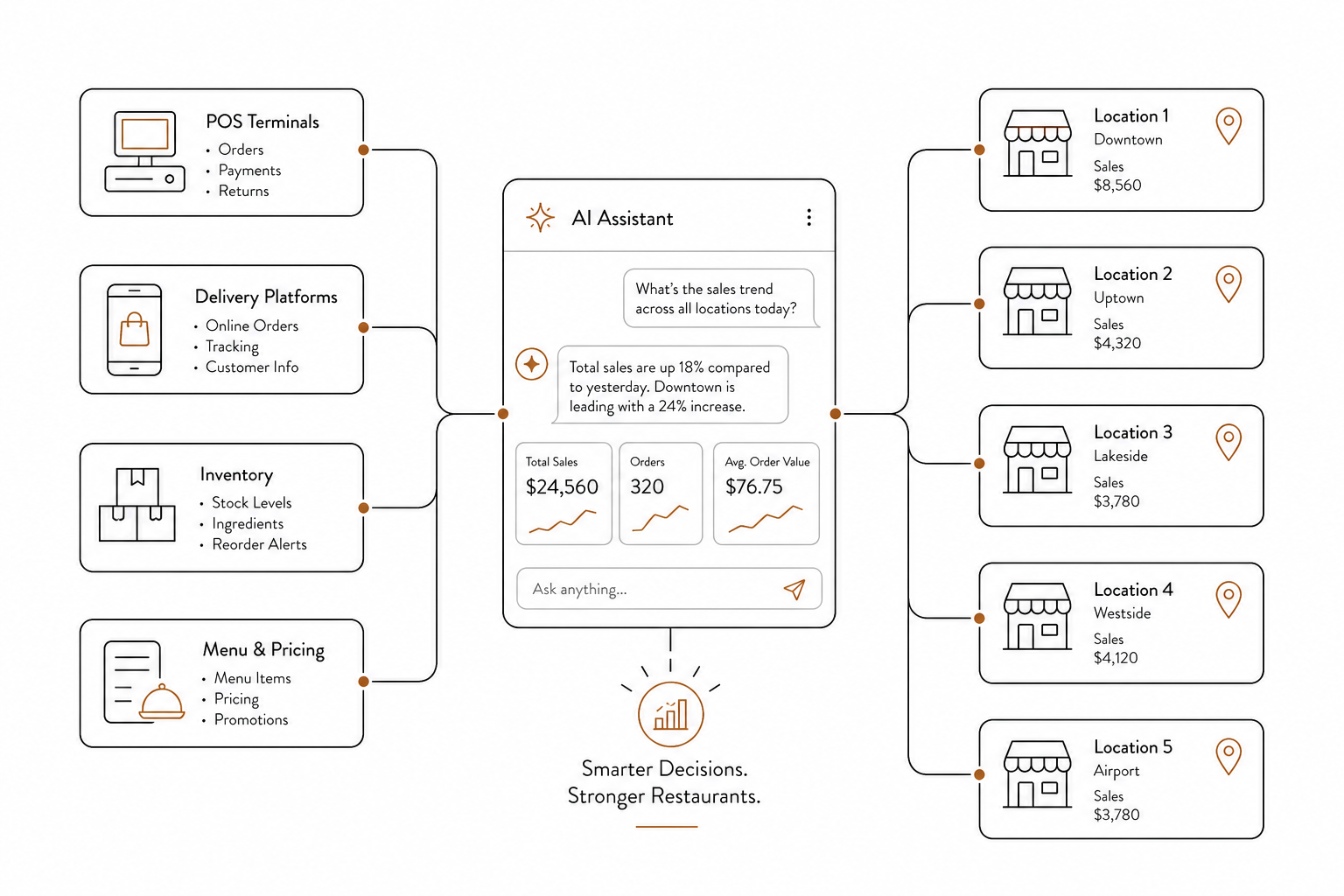
Instead of clicking through tedious menus and forms for dozens of locations, you can update your entire brand with natural language prompts:
- "Add the new Spicy Tuna Bowl to all Midwestern locations at $15.99, mark it with a gluten-free tag, and push it live on all third-party delivery channels."
- "Update our lunch menu pricing across all 15 stores to reflect our new seasonal rates starting next Monday at 10 AM."
By pairing a centralized platform like Spindl with the AI-driven automation of AgenticPOS, multi-unit menu rollouts shift from a high-stress operational nightmare to a coordinated, single-click task.
Ready to simplify your multi-unit operations and run your restaurant by talking to it? Learn how AgenticPOS can transform your menu management workflow today.