How to use AI customer segmentation to boost restaurant retention
Boost restaurant retention by using AI to segment guests based on order history. Target lapsed VIPs and daypart specialists to increase your marketing ROI.
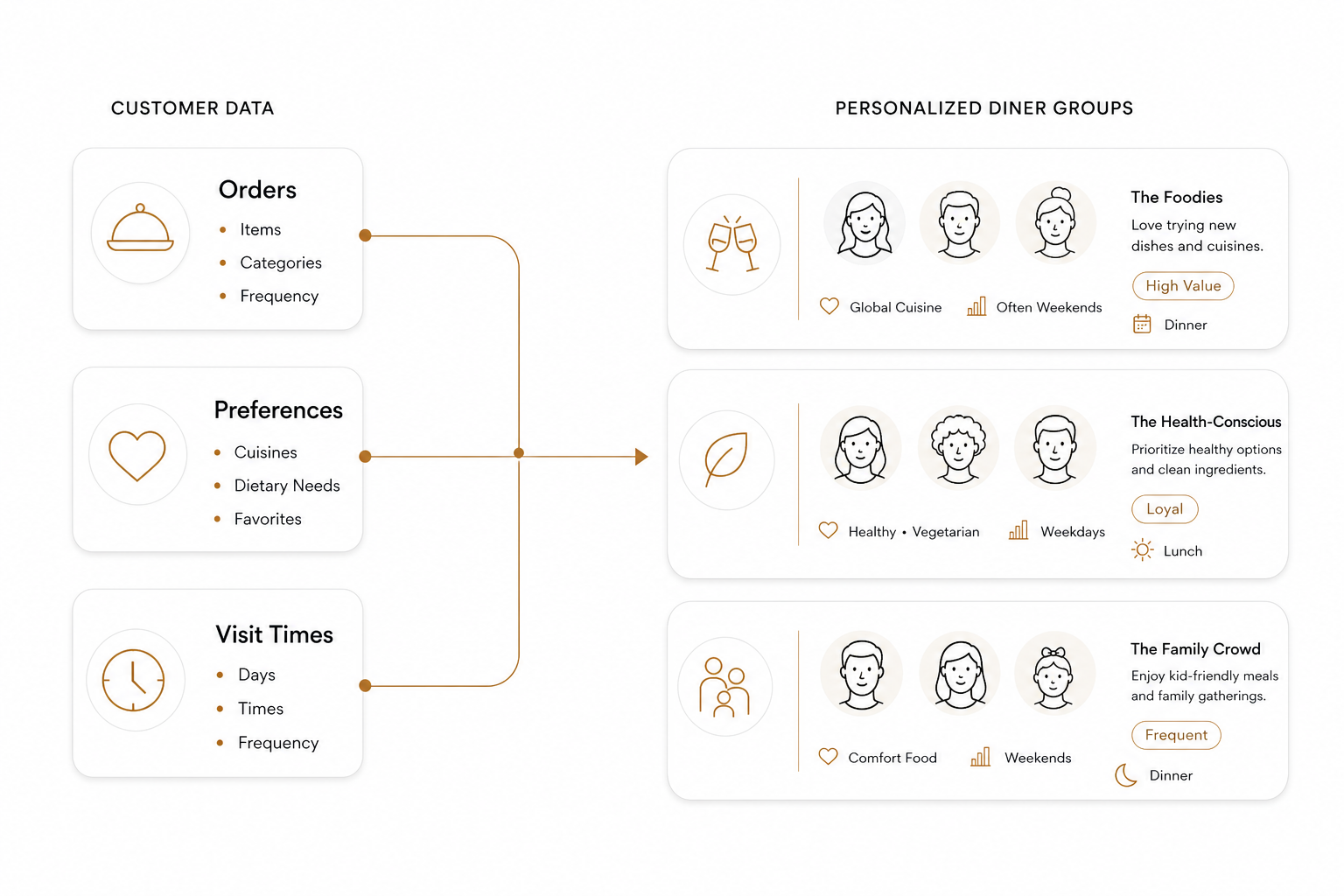
Blast-emailing your entire database with the same generic coupon is an expensive way to train customers to ignore you. To drive real retention, you have to personalize.
Modern restaurant personalization relies on customer data – like order history, dietary preferences, and visit times – to replace one-size-fits-all outreach with targeted promotions. AI-driven customer segmentation automates this process by grouping diners by their actual traits and spending patterns. This ensures guests receive offers they actually want, which strengthens brand trust and increases your marketing ROI.
The loyalty opportunity by the numbers
Guests want to engage with restaurants that understand them. In fact, young consumers are highly receptive to structured rewards programs. According to research on restaurant customer retention, 64% of Gen Z patrons and 61% of millennial patrons participate in loyalty programs at one or two table-service restaurants they frequent.
Furthermore, college-educated adults and consumers earning more than $100,000 annually show the highest engagement rates with local restaurant loyalty programs, at 50%. This high-value demographic responds to tailored experiences, but they also expect premium, streamlined execution.
Guest segments your AI should target
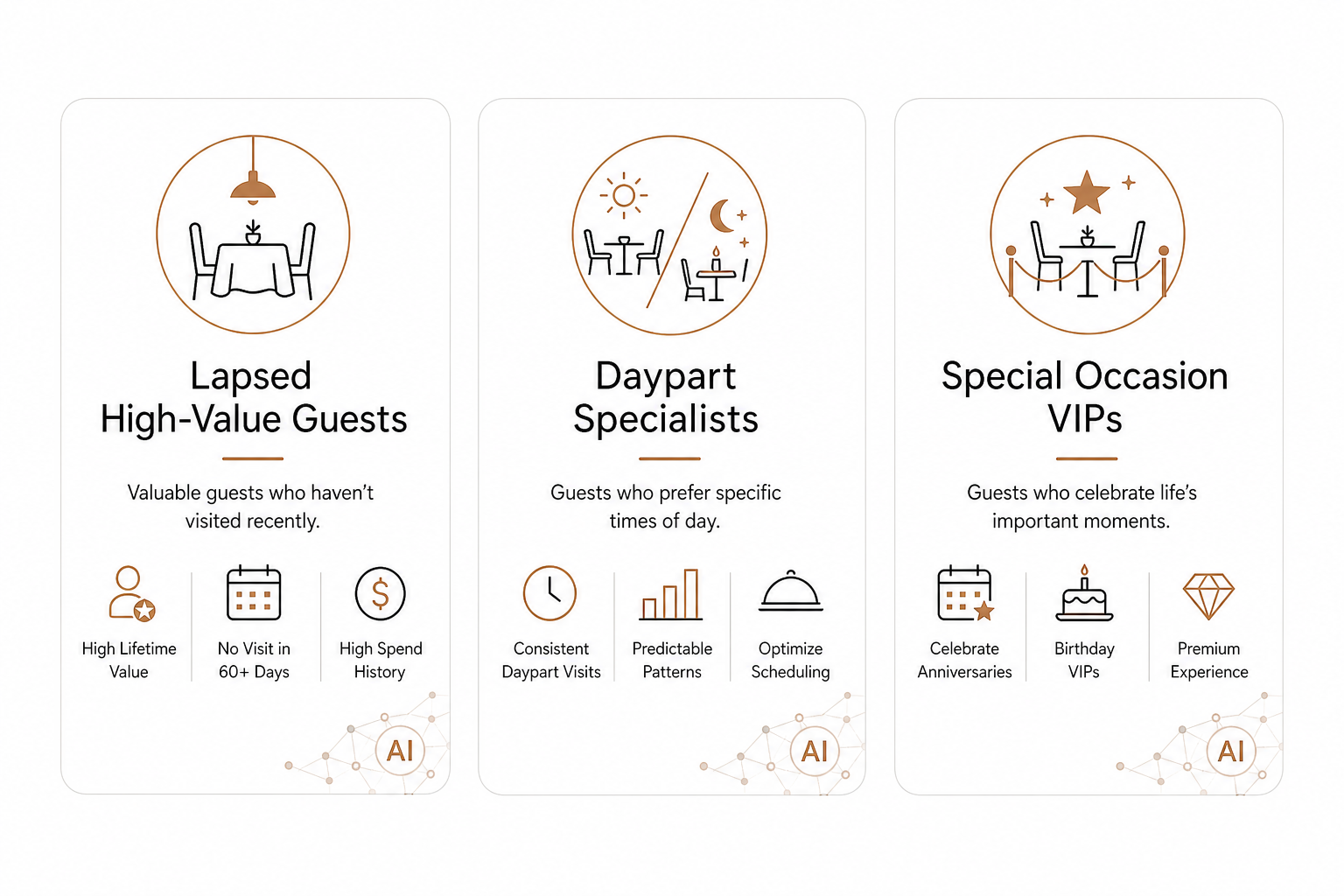
Instead of forcing your managers to sift through manual spreadsheets, AI tools analyze reservation history, POS transactions, and feedback to group guests dynamically. Here are three high-impact segments you can target to keep tables full.
Lapsed high-value guests
These are guests who used to visit frequently or spend heavily, but have not dined with you in 30, 60, or 90 days. AI can flag these accounts and automatically deploy retention-focused restaurant marketing strategies, such as sending a personalized "we miss you" offer featuring a discount on their favorite dish or beverage.
Daypart specialists
Some guests only visit for weekend brunch, while others are strictly late-night snackers. AI groups these diners by their preferred time of day, allowing you to cross-promote new menu items for those specific dayparts without spamming guests who only visit for dinner.
Special occasion VIPs
By tracking booking and transaction dates, AI can identify guests who visit primarily on birthdays, anniversaries, or major holidays. Automating targeted invitations ahead of these milestones secures high-margin bookings before competitors can reach them.
Navigating restaurant data privacy
While leveraging guest data is highly profitable, operators must handle it responsibly. In the United States, there is no single comprehensive federal consumer privacy law. Instead, restaurants must navigate a guide to state consumer data privacy laws to keep track of a growing patchwork of regulations, with twenty states having enacted comprehensive statutes.
For example, California’s Consumer Privacy Act (CCPA), strengthened by the California Privacy Rights Act (CPRA), grants residents clear rights to know what personal information is collected, request its deletion, and opt out of the sale of their data. Additionally, the Federal Trade Commission (FTC) enforces Section 5 of the FTC Act, which penalizes unfair or deceptive practices. If your marketing claims you protect guest data, your AI and storage systems must live up to those promises. Secure, compliant data storage is non-negotiable.
Streamline your data with the right tech stack
To segment guests accurately, your front-of-house, loyalty, and POS data must live in harmony.
The best foundation is a modern, unified POS system like Spindl. While legacy platforms function like outdated flip phones, Spindl acts like an iPhone. It integrates order taking, delivery, self-service, and loyalty systems into a single device. This consolidated data feed gives your AI clean, real-time insights into exactly who is buying what, and when.
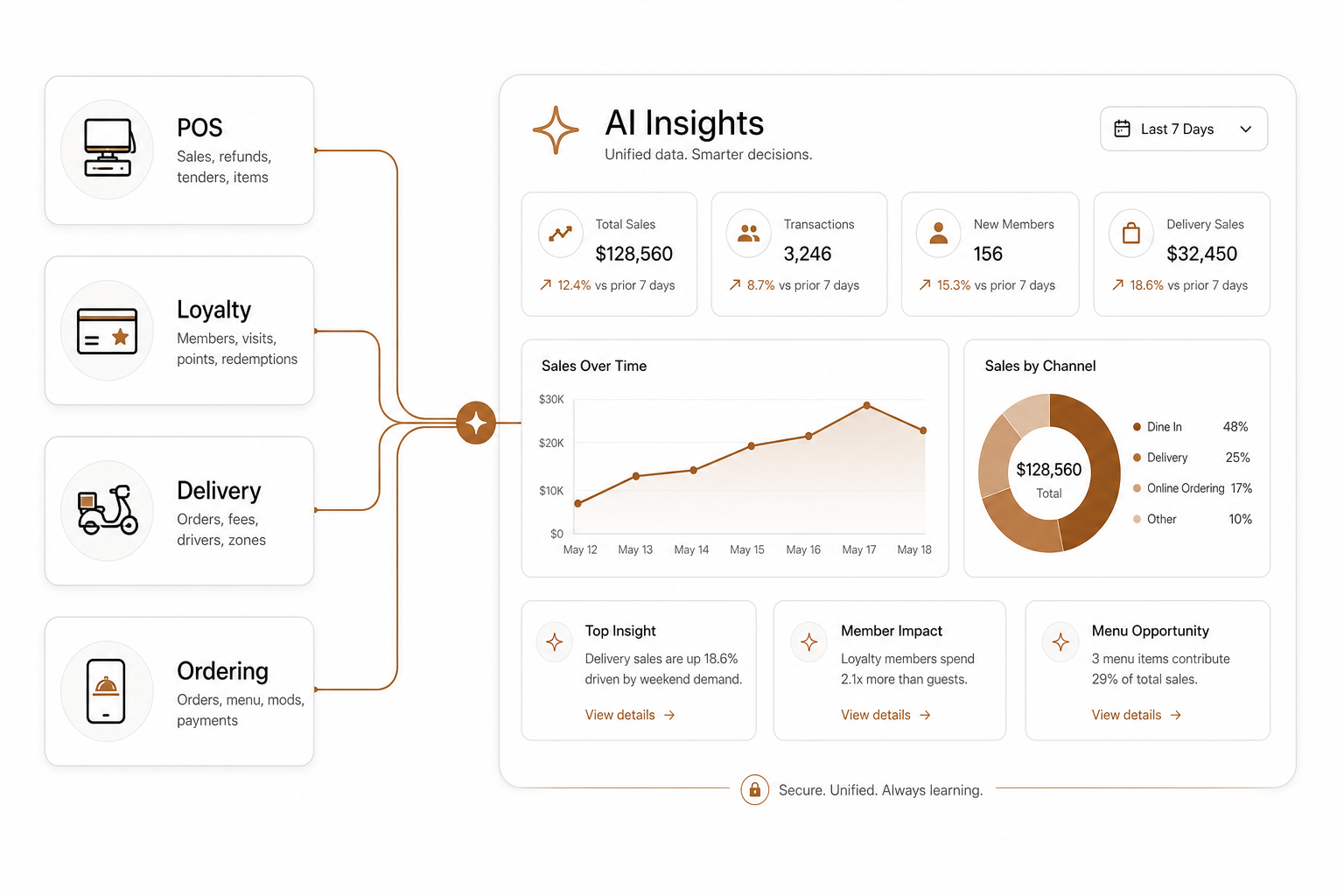
Once your data is consolidated, you can use AgenticPOS to put your AI agents to work. AgenticPOS is an MCP server that connects to your existing POS system and exposes over 140 agent-callable tools. Instead of clicking through complex analytics dashboards, you can simply chat with your POS to run real-time channel mixes, analyze loyalty programs, or deploy automated promotions.
You can instruct your AI agent to scan customer profiles, identify lapsed high-value guests, and generate a customized promotion code – all through a simple chat interface or a Slack bot. Because AgenticPOS includes strict operator permissions, you retain full control and can issue tokens with exactly the read or write access you allow.
Stop wasting marketing dollars on generic blasts. Take control of your guest data, respect their privacy, and let AI build the automated campaigns that keep your tables full.