How restaurant automation cuts BOH operating costs
Learn how restaurant automation software cuts back-of-house costs by streamlining inventory and vendor management while using AI to simplify operations.
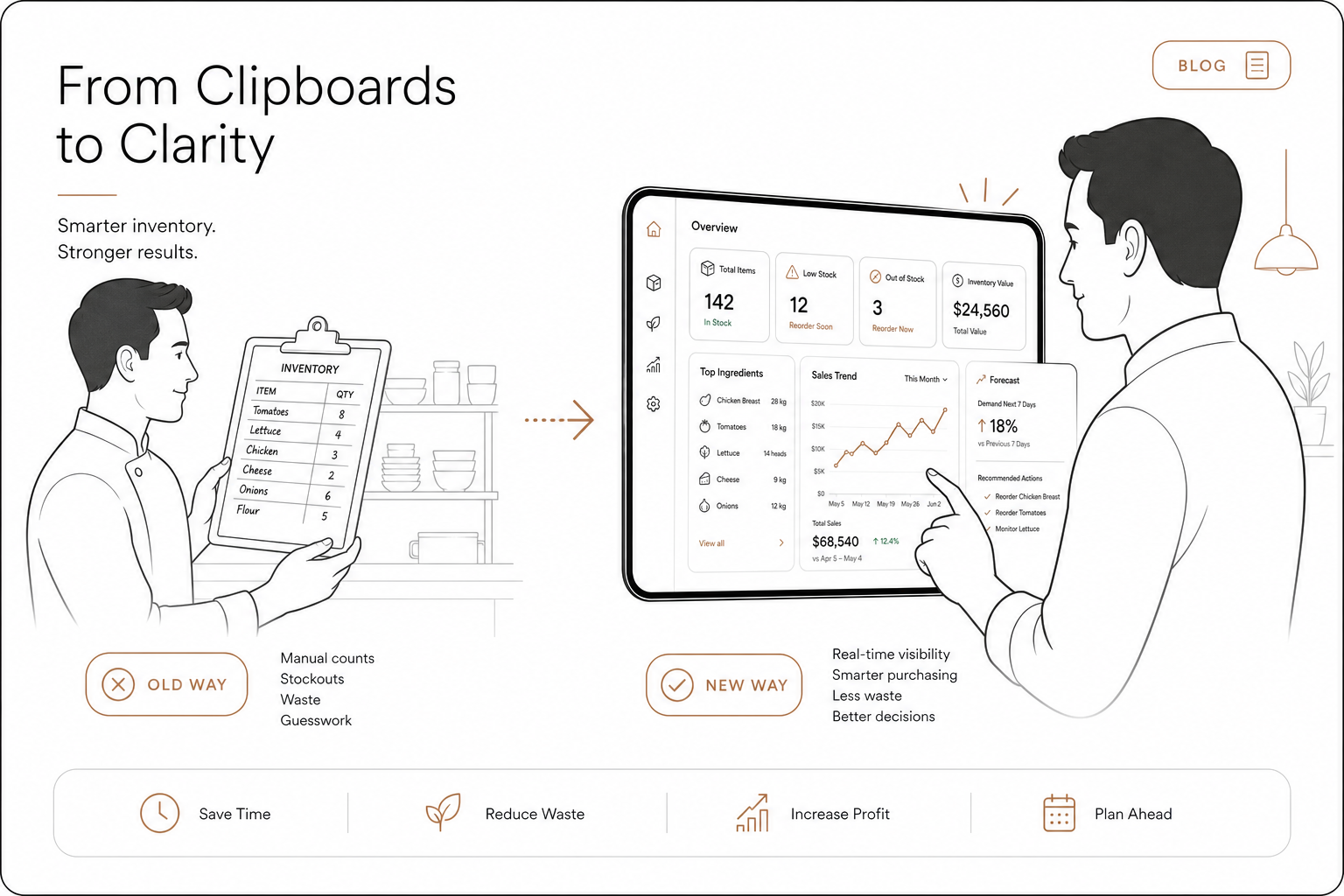
Running a restaurant is a constant battle against rising expenses. Operators are currently grappling with high food and labor costs, forcing many to turn to technology solutions to protect their margins. While front-of-house tech gets plenty of attention, the real efficiency gains happen behind the scenes. Automating your back-of-house (BOH) workflows is the fastest way to reduce manual labor, eliminate costly errors, and regain control of your bottom line.
Ditch the clipboard for digital inventory
Taking inventory by hand is a recipe for errors. Counting boxes on paper and manually typing them into a spreadsheet takes hours of valuable manager time. It also makes it incredibly easy to miss critical discrepancies.
Transitioning to a digital workflow completely changes how you manage stock. Instead of guessing what to order, restaurant automation software uses your historical sales data and forecasting tools to determine exactly how much inventory you need to buy and prep.
This digital tracking is essential for closing the gap between actual and theoretical food costs. When your software knows what went out the door through your point-of-sale (POS) system, it knows exactly what should be sitting in your walk-in. If there is a discrepancy, you can immediately spot theft, portion control issues, or waste.
To make this transition seamless, you need a modern foundation. A platform like Spindl acts as an all-in-one POS system that unifies order taking, delivery, and payments, ensuring your sales data flows directly into your digital inventory tracking workflow without manual data entry.
Streamline your vendors and diversify your supply
Relying on a single supplier is a gamble. If your primary vendor runs out of key ingredients, your menu suffers. However, managing orders across multiple suppliers manually is an administrative nightmare.
Automation software simplifies vendor management by centralizing communication, purchasing, and invoicing in one hub.
- Supplier diversification: You can easily buy from multiple vendors to maintain flexibility and reduce supply chain risks.
- Dynamic price tracking: Automation tools can track price fluctuations across different vendors, helping you purchase from the most cost-effective source.
- Consolidated administrative work: Instead of logging into multiple vendor portals, managers can submit purchase orders and pay invoices from a single dashboard.
With structured purchasing, you reduce food waste and keep cash flowing through the business rather than sitting idle on your shelves.
Simplify multi-location oversight
As your restaurant business scales, managing BOH operations gets exponentially harder. What works for a single location can quickly break when spread across five or ten units.
Multi-location automation software gives you centralized, real-time visibility across all your sites. It standardizes your BOH processes so every kitchen runs on the same playbook.
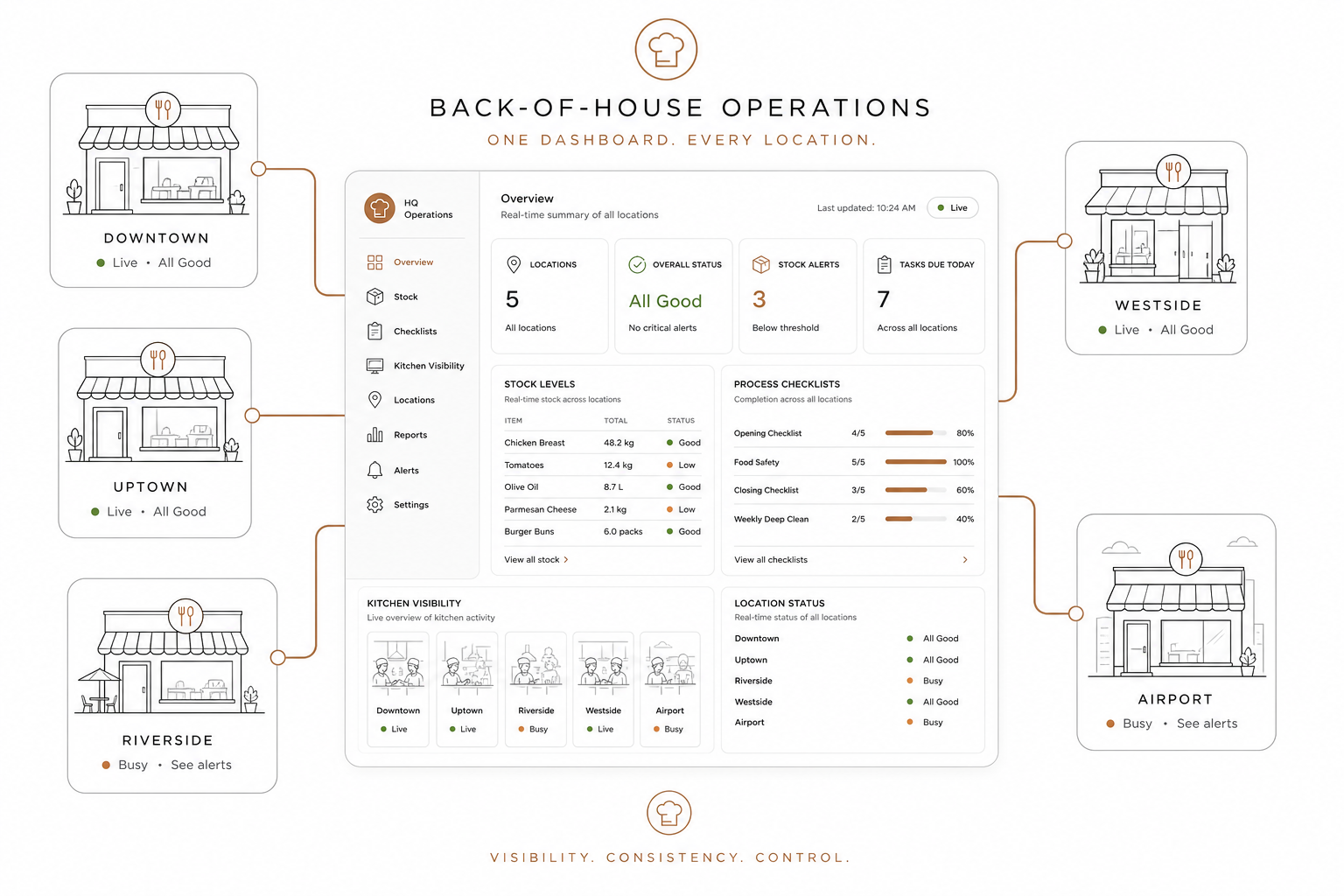
With centralized oversight, regional managers can track stock levels across all units in real time, identify high-performing locations, and easily coordinate stock transfers between stores to prevent spoilage. This level of multi-location inventory optimization keeps your brand consistent and prevents localized inventory shortages.
Centralizing these administrative tasks also keeps your labor costs in check. For most operations, labor costs should ideally fall between 28% and 32% of your restaurant's sales. By automating multi-location updates and reporting, your managers spend less time on administrative data entry and more time training staff and serving guests.
Run your back-of-house with natural language
The biggest hurdle with traditional restaurant software is complexity. Managers already have their hands full; they do not want to spend hours clicking through rigid dashboards to pull a food cost report or update a menu item across three locations.
This is where conversational automation changes the game.
With AgenticPOS, you can run your restaurant simply by talking to it. AgenticPOS is an MCP server that connects to your existing POS system and exposes over 140 operational tools – covering inventory, shifts, menu management, and analytics – to AI agents.
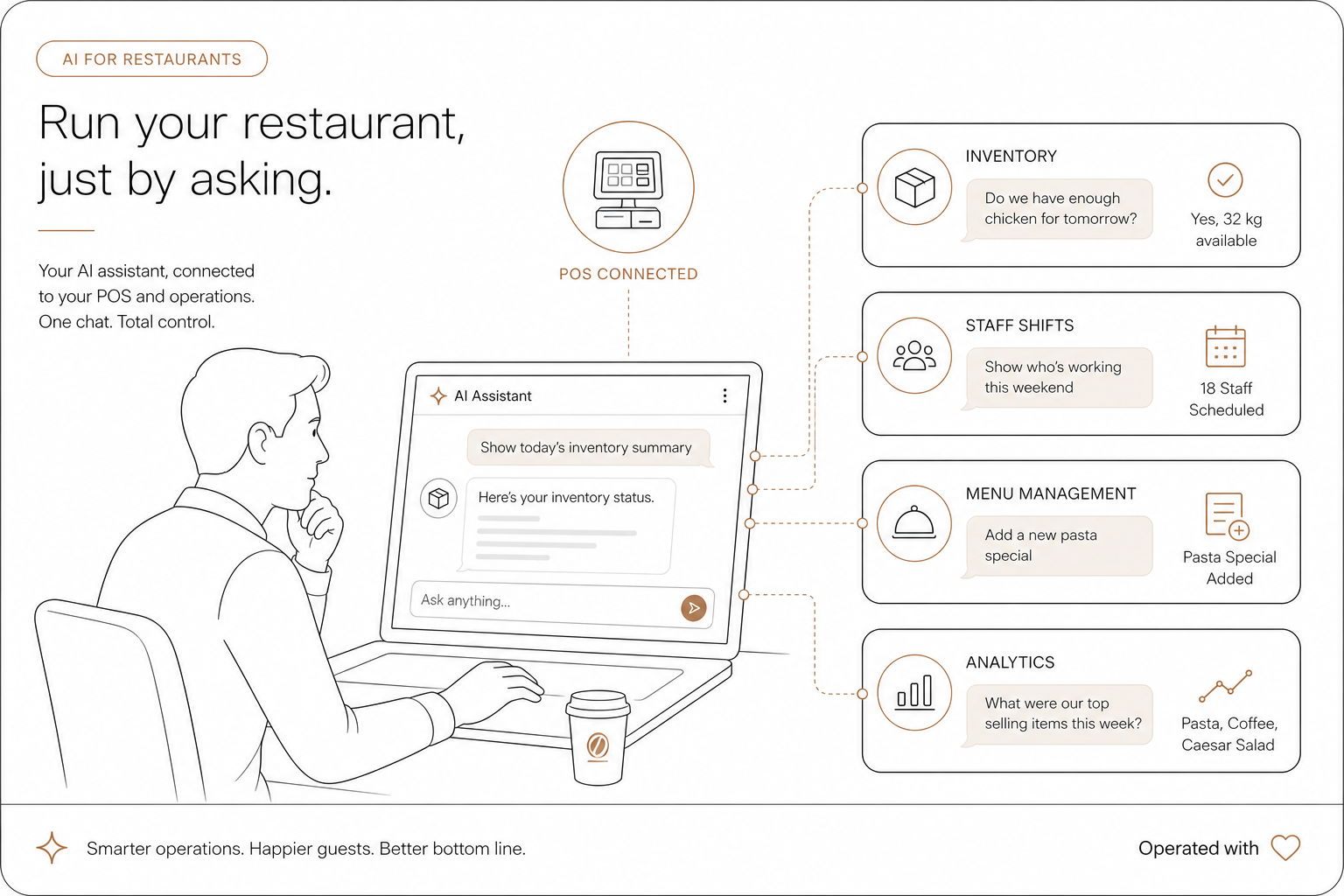
Instead of navigating legacy software, you or your managers can chat with Claude, ChatGPT, or a Slack bot to perform complex back-office operations:
- Query stock levels: "Do we have enough chicken breast across our downtown locations for the weekend?"
- Update pricing: "Increase the price of our lunch specials by 5% across all locations starting Monday."
- Run real-time reports: "Send me a summary of today's labor cost percentage compared to last week."
By pairing an advanced POS system like Spindl with AgenticPOS, you give your managers the power to automate repetitive workflows and control multi-location operations without being chained to a back-office desk.
Bring your operations into the future. Let AgenticPOS turn your POS into a conversational assistant that handles your heaviest back-of-house workflows.