What is an agentic POS? How AI runs your restaurant
Learn how agentic POS systems use autonomous AI to manage restaurant inventory, labor, and pricing, transforming back-office tasks into simple workflows.
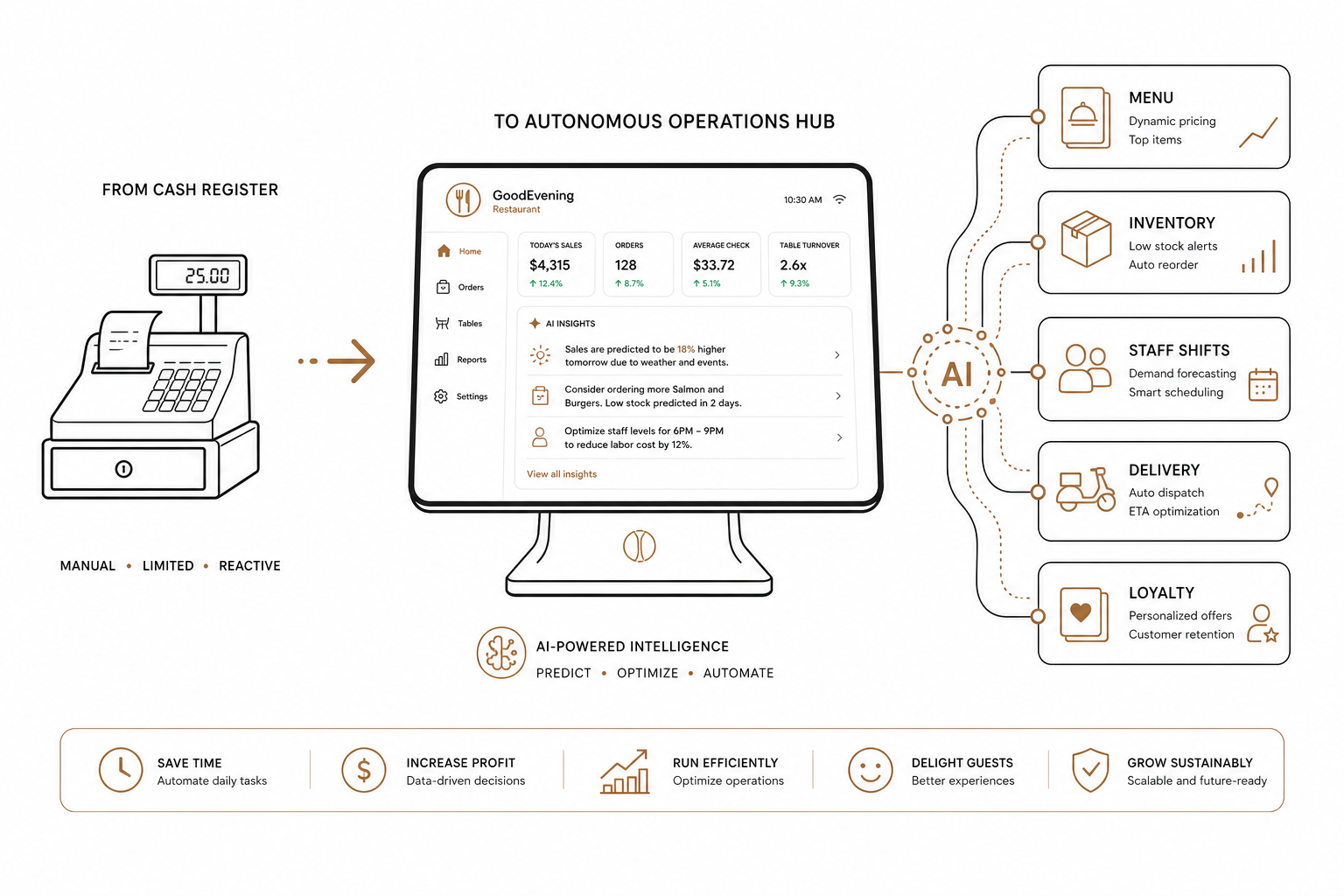
Restaurant operators face a persistent margin squeeze. Industry data shows that 91% of operators report rising food costs, and 89% face surging labor expenses.
To survive, you need more than a passive checkout counter. You need active assistance.
Enter the agentic POS.
This emerging technology is transforming restaurant back-offices from manual control centers into autonomous operations.
Understanding agentic AI and the POS
To understand an agentic POS, you first need to understand agentic AI.
Unlike traditional AI tools that merely respond to simple prompts, agentic AI systems are autonomous. They are proactive, can act independently to achieve pre-determined goals, and perform complex tasks without constant human oversight.
AI agents function as cognitive layers on top of large language models. They observe operations, collect data, generate action plans, and execute tasks on your behalf.
An agentic POS applies this level of autonomy to your restaurant's point-of-sale system.
Traditional POS systems are digital cash registers. They record sales and wait for you to click through endless dashboards to manage inventory or update pricing. A modern, all-in-one platform like Spindl streamlines these operations by consolidating ordering, delivery, and loyalty into a single device. An agentic POS goes a step further. It connects your POS software to AI agents that can manage your menu, staff shifts, inventory, and back-office workflows autonomously.
How does an agentic POS actually work?
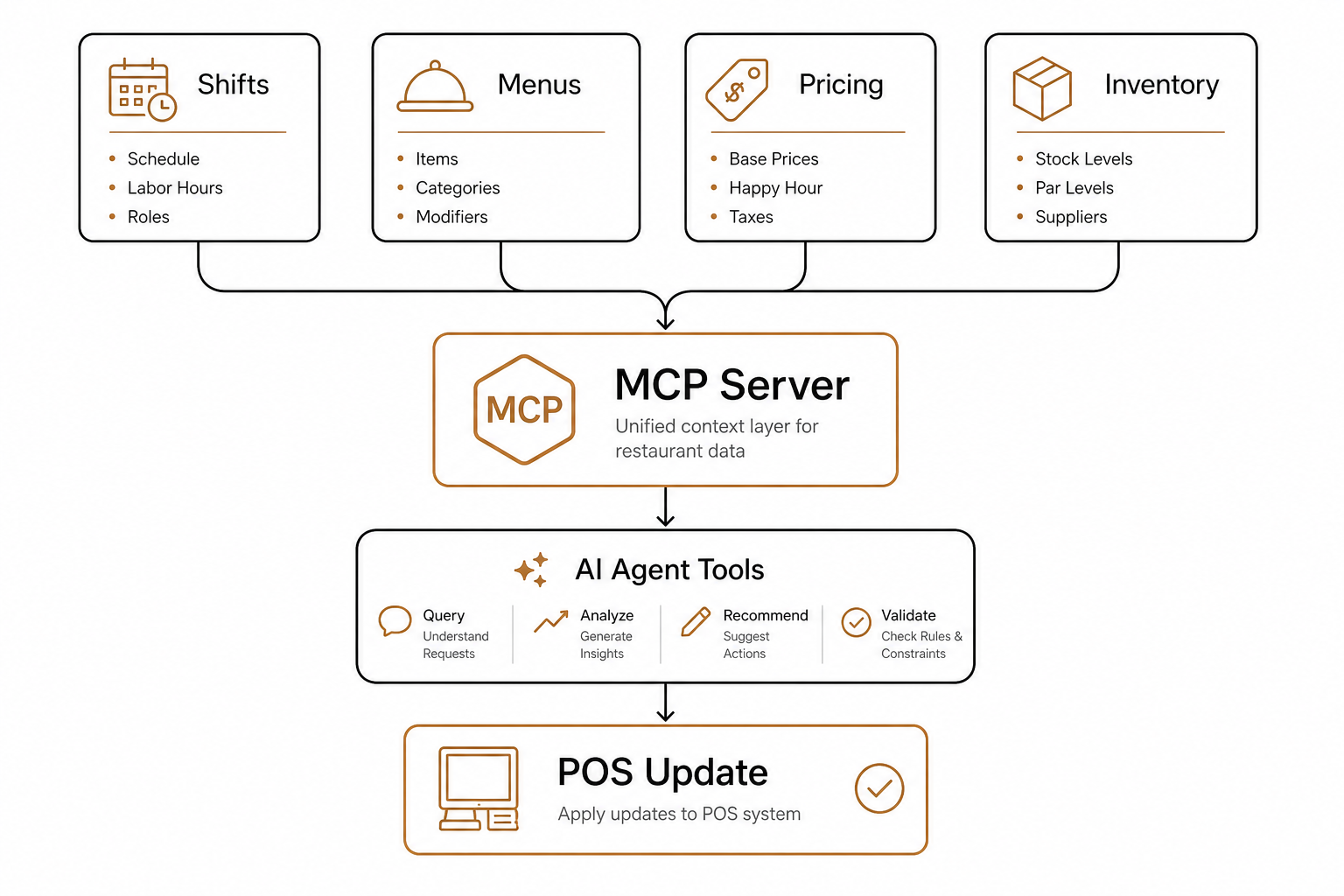
An agentic POS works by exposing the entire point-of-sale surface area to AI tools.
This is made possible by open integration standards like the Model Context Protocol (MCP). Developed by Anthropic, MCP is an open standard that allows developers to build secure, two-way connections between LLM applications and external data sources.
By turning your POS into an MCP server, your restaurant’s data – shifts, menus, pricing, and inventory – is mapped into "agent-callable tools." Instead of a human manager manually pulling CSV files and executing updates, an AI agent can read the data, determine the best course of action, and execute the changes directly in the POS software.
How AI agents manage restaurant operations
Here is how agentic POS systems tackle back-office friction in daily operations.
Automated inventory and smart reordering
Manual inventory counts waste time and invite error. An agentic POS tracks ingredient usage in real time, projects future needs based on historical sales trends, and automatically drafts purchase orders when stock levels run low. This prevents stockouts, reduces food waste, and keeps your food costs tightly controlled.
Optimized labor scheduling
Labor scheduling is a constant balancing act. AI agents use predictive analytics to forecast guest traffic based on past sales, local events, and weather forecasts. By automatically building shift templates tailored to this demand, operators can see labor costs drop by 3% to 5% while preventing understaffing during peak hours.
Dynamic pricing and menu analytics
Instead of keeping menu prices static year-round, AI agents analyze menu performance to highlight high-margin items and suggest price adjustments for delivery channels during high-demand shifts. The agent handles the pricing updates across all your channels automatically, protecting your margins in real time.
Seamless back-office automation
AI agents can handle repetitive admin tasks like invoice capture, data entry, and financial reconciliation. The agent matches supplier invoices against purchase orders, flags discrepancies, and updates your ledger without requiring hours of manual data entry.
From dashboards to dialogue
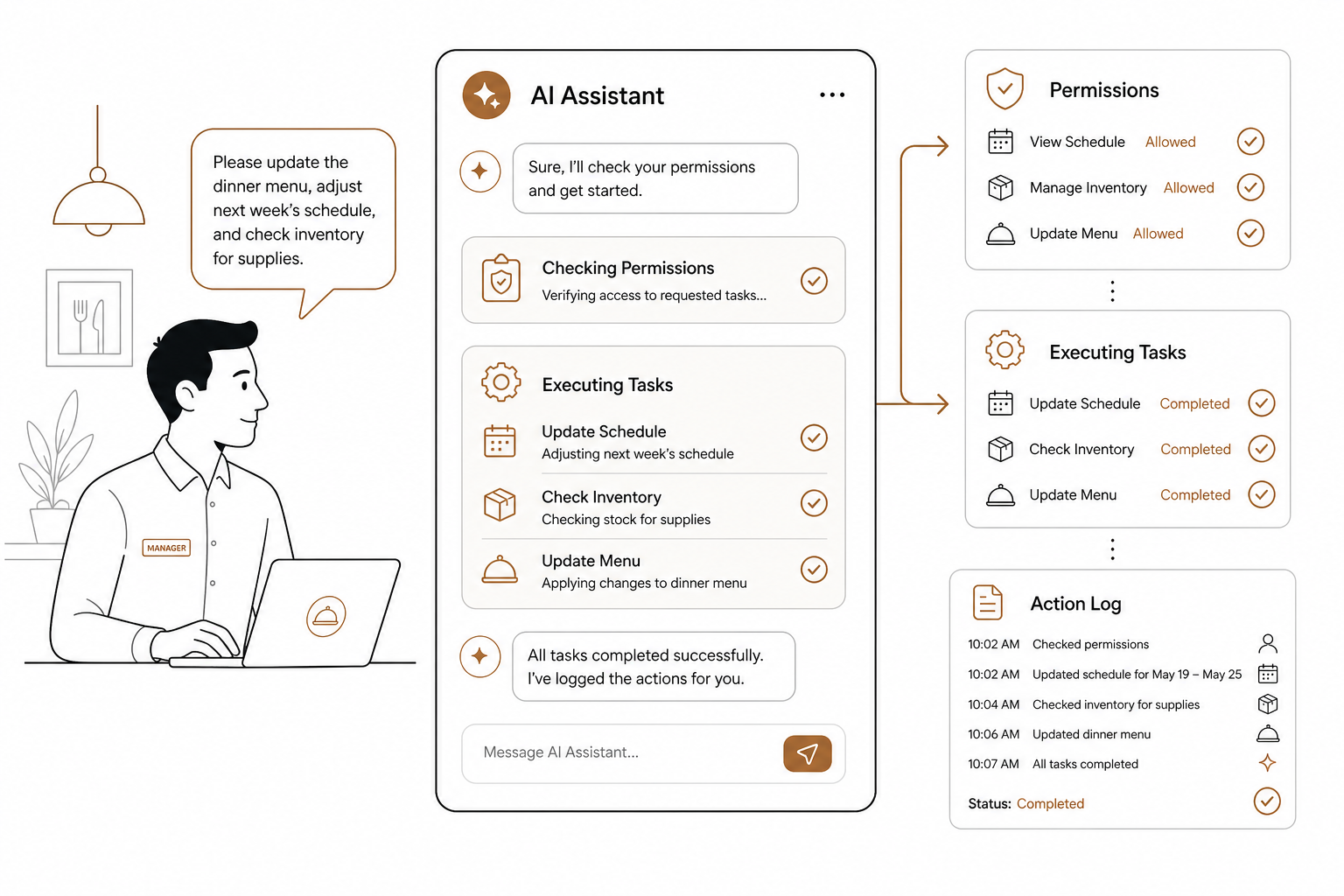
Managing a restaurant shouldn't mean spending three hours a day clicking buttons on a back-office dashboard. With an agentic POS framework, your interface becomes a simple conversation.
You can manage your entire operation by talking to Claude, ChatGPT, or a Slack bot:
- “Update the Friday night shift schedule to account for the local concert.”
- “Draft a purchase order for our avocado supplier based on next week's forecast.”
- “Run a promotion on our high-margin appetizers for the slow hours this Tuesday.”
The AI agent plans the action, checks your guardrails, and executes it. You remain in complete control with built-in permissions and logging, but the busywork is entirely offloaded.
If you want to transition your restaurant from manual tracking to autonomous management, you do not need to rebuild your tech stack from scratch.
You can start with a modern, high-efficiency system like Spindl to unify your delivery, POS, and loyalty operations. Then, connect your system to AgenticPOS, the open-standard MCP server that turns your POS operations into over 140 agent-callable tools.
Ready to see how conversational AI can streamline your back-office? Learn how AgenticPOS can bring autonomous operations to your restaurant today.