How to train staff on a POS system in hours
Train restaurant staff on a POS system in hours. Discover an onboarding framework using hands-on practice, physical job aids, and AI to minimize errors.
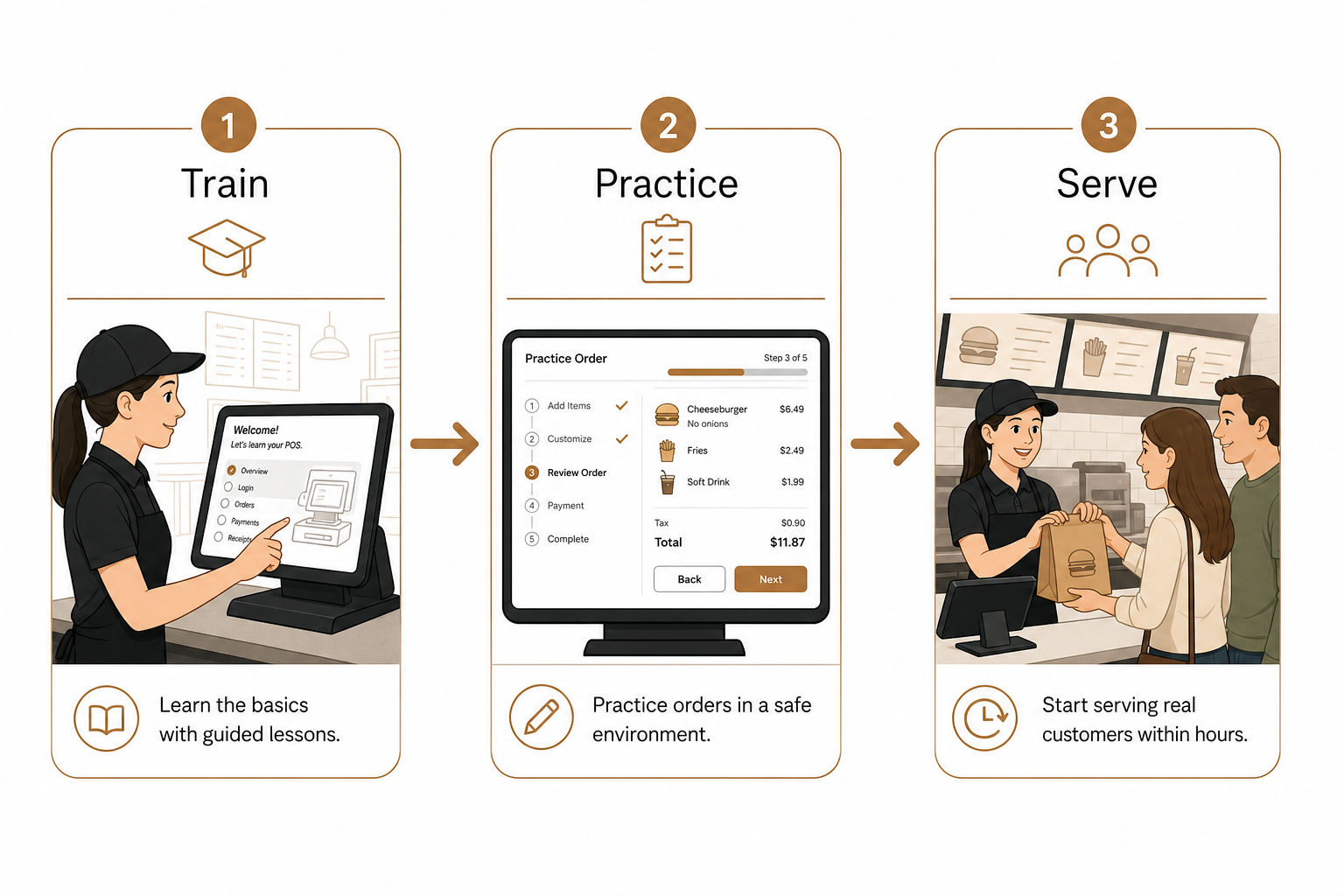
The restaurant industry runs on tight timelines and high turnover. According to data from the U.S. Bureau of Labor Statistics, the monthly employee turnover rate in the restaurant sector hovers around 5.5%, far exceeding the 3.4% average across other sectors. Worse, cohort tracking shows that the average tenure for a new hire is only 110 days.
With workers cycling through your doors every three months, you cannot afford to spend weeks training cashiers, servers, and managers on a complex point-of-sale system. Every hour spent on training is an hour of lost productivity.
To keep your lanes moving and your margins intact, you need an onboarding framework that minimizes errors and gets staff operating at peak speed within hours, not weeks. Here is how to build a high-performance training workflow for your restaurant.
Start with an intuitive point-of-sale platform
You cannot train your way out of bad software design. If your current POS requires a 50-page manual just to split a bill, you are fighting a losing battle. Legacy terminals are like clunky Nokia 3310s – slow, confusing, and frustrating for modern workers.
Instead, look for systems built like modern smartphones. Spindl is our preferred all-in-one POS system because it unifies order taking, delivery apps, and loyalty into a single device. When software is intuitive, your restaurant's onboarding time drops dramatically, saving hundreds of hours in labor costs over a year.
Use evidence-based, hands-on training
Reading a manual does not build muscle memory. Effective workplace training must simulate the actual work environment and use interactive scenarios to ensure the knowledge sticks.
To get cashiers up to speed, use an evidence-based three-step training sequence that focuses on performance skills:
- Instruction: Walk the trainee through the terminal layout. Show them how to navigate menus and locate key modifiers.
- Demonstration: Process a mock order yourself while explaining your steps out loud.
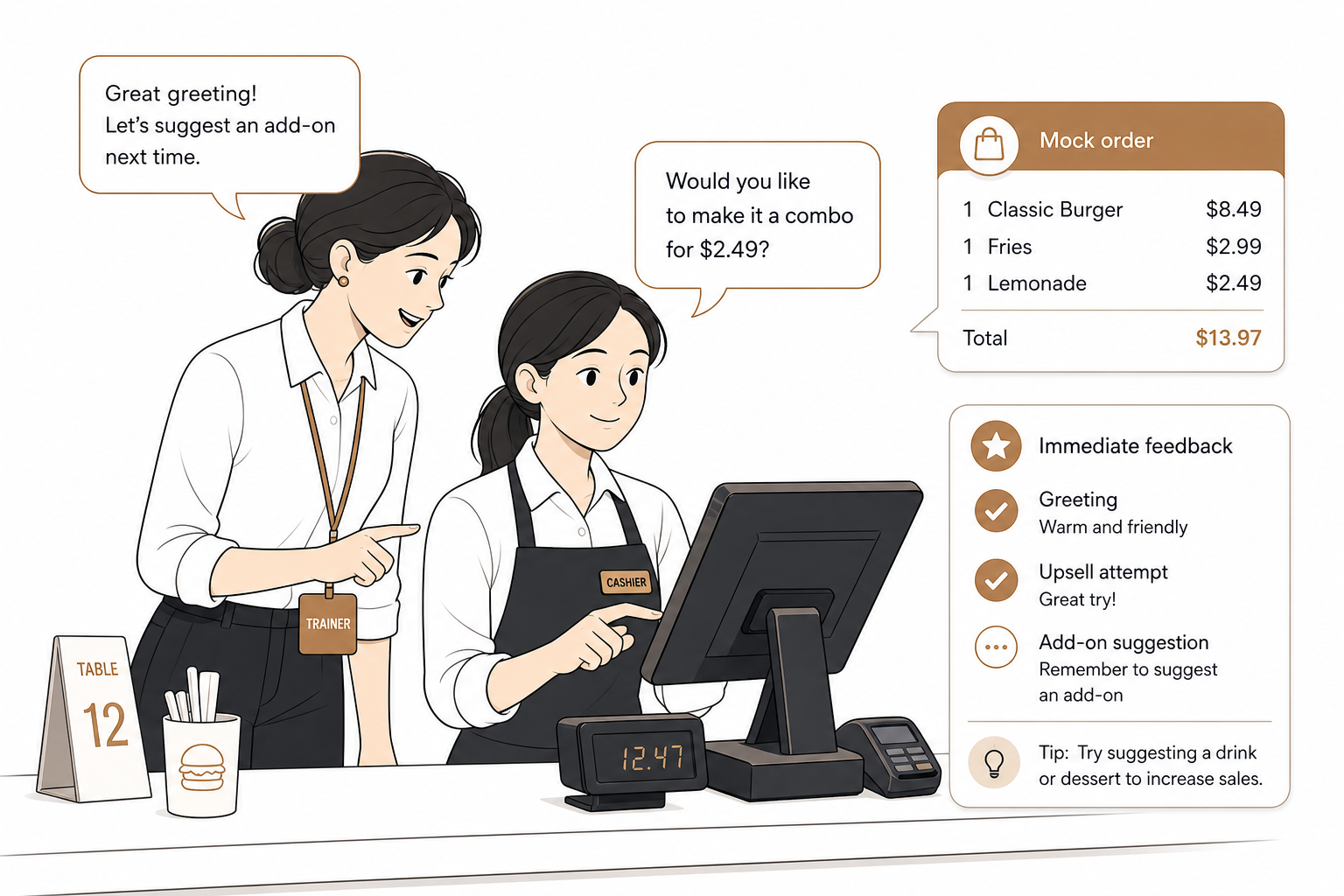
- Roleplay Practice: Let the trainee run the screen while you act as a customer. Throw in last-minute substitutions, split-payment requests, and discount coupons.
During these roleplay sessions, provide clear, immediate feedback. Correcting mistakes in real-time prevents bad habits from hardening into muscle memory. Studies show that structured training programs do not just prepare frontline employees to handle complex workflows; they also generate significant business value. In fact, targeted training programs can lead to an 8% increase in manager productivity by slashing the time managers spend solving staff errors.
Train for absolute order accuracy
Inaccurate order entry ruins your margins, creates food waste, and damages customer loyalty. Order-taking training should focus heavily on preventing communication gaps. This is especially vital for dietary restrictions. A significant portion of allergic reactions while dining out occur because of simple, preventable communication failures between staff and customers.
To eradicate these errors, mandate a strict order entry protocol:
- Confirm preferences: Instruct staff to proactively ask about required cooking temperatures and side preferences right at the terminal.
- The double-check rule: Always have servers verify and repeat the order back to the guest before hitting "send."
- Standardize modifications: Ensure custom instructions are typed using pre-approved abbreviations to avoid confusing the kitchen. If you are preparing to roll out a major menu shift, align your entire team on these custom modifiers beforehand by preparing clear, standardized menu SOPs.
By systematizing order entry, you prevent the misheard items and incorrect modifications that lead to wasted ingredients and comped meals.
Place physical job aids at the terminal
Do not expect your floor staff to memorize every single edge-case procedure. When a customer wants to pay with a gift card, split a transaction three ways, or apply a tax-exempt coupon, your staff should not have to hunt down a manager.
Instead, create simple, single-page job aids for these complex processes. Keep the design highly functional:
- Use short sentences and action-oriented steps.
- Ensure each step focuses on a single action.
- Laminate the sheets and tape them directly next to the cash registers.
These physical guides act as on-the-spot support, enabling cashiers to self-correct during a rush and preventing bottlenecked queues.
Move back-office admin tasks to AI
Training front-of-house staff on basic register actions is easy. The real bottleneck is training shift managers and assistant managers on complex back-office administrative tasks – such as updating menus, adjusting inventory quantities, generating reports, and scheduling shifts.
Every minute a manager spends wrestling with a clunky, multi-tiered software dashboard is a minute they are not spending on the floor supporting their team.
With AgenticPOS, you can bypass back-office system training entirely. AgenticPOS is an AI-driven platform that connects directly to your restaurant's POS. Instead of clicking through menus and exports, your managers can control operations by simply talking to an AI agent via Slack, Claude, or ChatGPT.
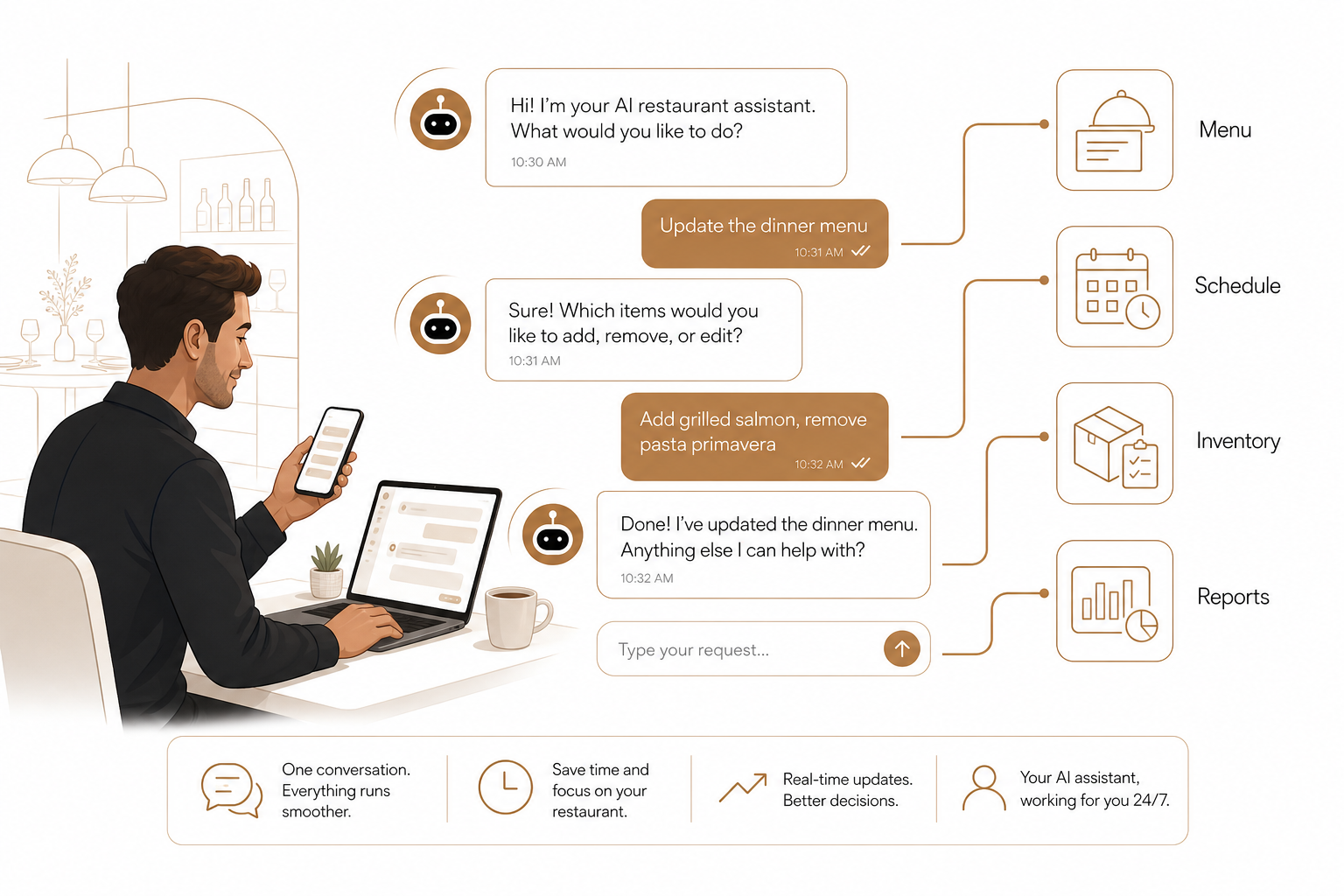
"Hey, add a 10% discount on all draft beers for tonight's game shift."
"Update the Friday night shift schedule to cover for Sarah's leave."
"Draft a purchase order for hamburger buns because stock is running low."
By turning administrative friction into a simple text conversation, AI agents for restaurant management allow you to reclaim manager hours, scale back training overhead, and run highly automated workflows across all of your restaurant locations.
Build a rhythm of regular refresher sessions
One-and-done training does not stick. Without regular practice, skills decay, and staff will inevitably drift back to inefficient habits.
Establish an active managerial control system – a proactive system where managers continuously monitor, verify, and correct operational practices on the floor.
Integrate short, high-impact refresher sessions into your standard calendar. These do not need to be long. Brief, five-minute huddles before a shift to review a new POS feature, walk through an updated allergy protocol, or practice a loyalty signup script are highly effective at maintaining long-term accuracy.
Efficient onboarding is the difference between a chaotic shift and a highly profitable service. By pairing intuitive hardware like Spindl with hands-on practice, you can get new hires up to speed on day one.
Ready to eliminate administrative training entirely and run your back-office via simple chat? Start your 14-day free trial of AgenticPOS today.