How AI dynamic pricing protects thin restaurant margins
Protect thin restaurant margins with AI dynamic pricing. Learn how agentic POS systems automate menu updates to optimize revenue and maintain guest loyalty.
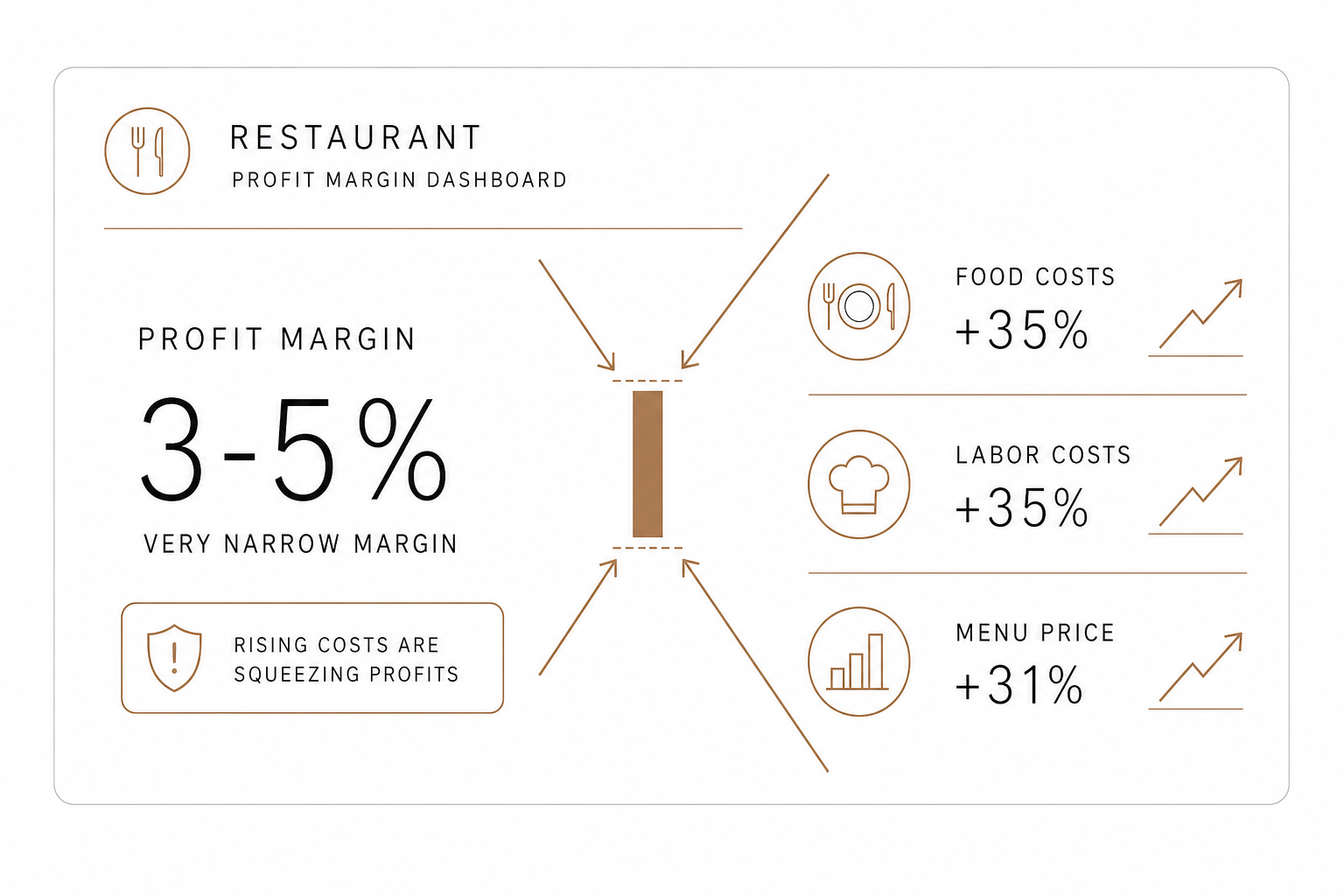
Restaurant margins are notoriously unforgiving. The National Restaurant Association notes that pre-tax profit margins for the average restaurant hover between a razor-thin 3% and 5%. Over the last five years, food and labor costs have each surged by 35%. To survive, most operators have had to pass these costs down, driving average menu prices up by 31% between 2020 and 2025.
But blunt, across-the-board hikes are risky. Modern diners are facing intense price fatigue. If guests feel a price hike is unfair, they will simply eat elsewhere. To grow revenue without alienating guests, forward-thinking operators are turning to AI-driven dynamic pricing and automated execution. Executing a strategic menu price increase in your POS requires careful planning, not a flat, arbitrary percentage bump.
What is dynamic pricing in a restaurant context?
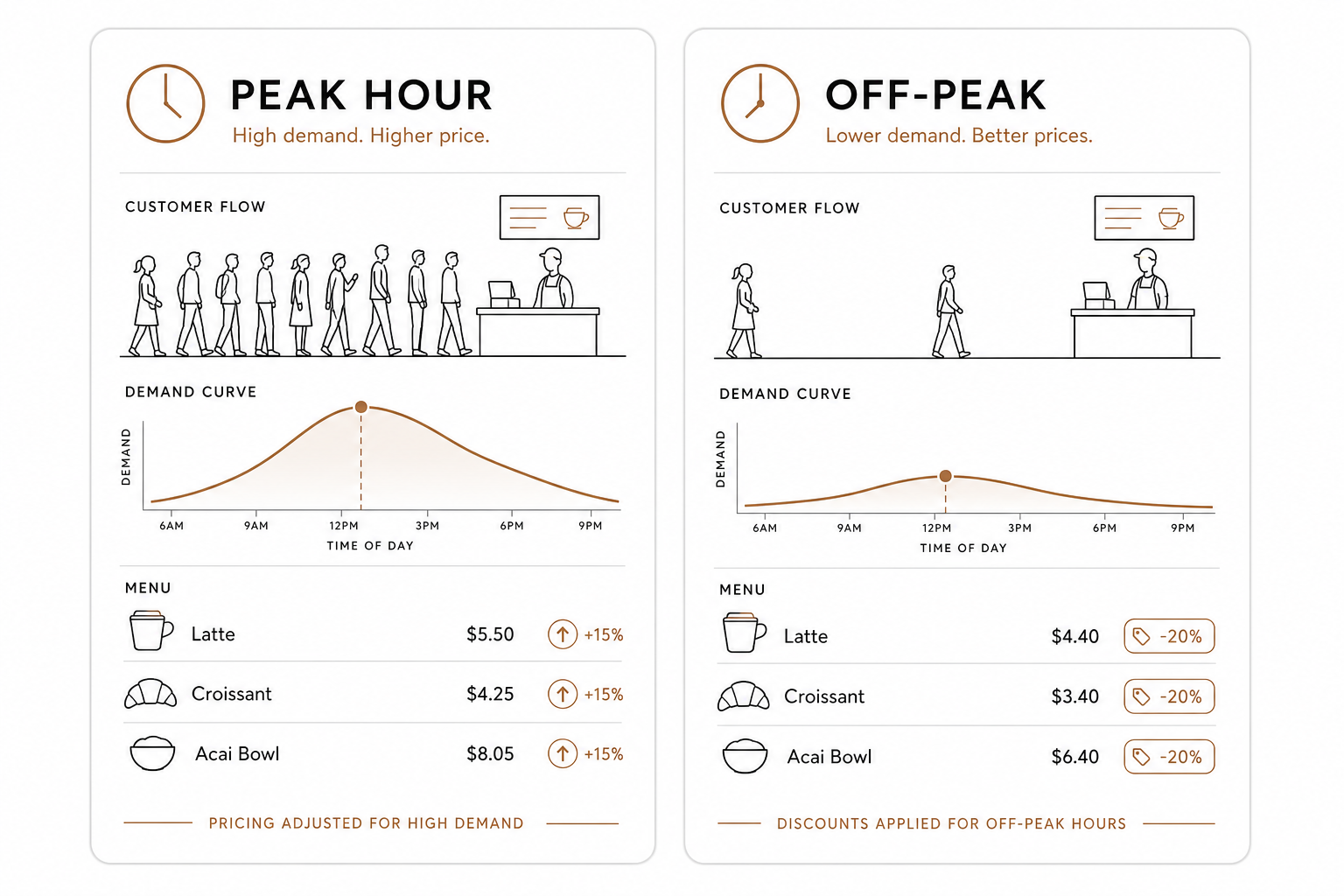
Dynamic pricing is the practice of adjusting menu prices in real time based on shifting market conditions. Instead of keeping prices static on a printed board for months, you adjust them based on demand, competitor activity, inventory levels, and historical sales trends.
As highlighted in industry research on restaurant revenue management, dynamic pricing is a pillar of modern operations. Rather than charging the exact same price for a sandwich on a slow Tuesday afternoon as you do during the Friday night rush, AI-driven systems calculate the optimal price point for each specific hour, channel, or customer segment.
This is not about tricking customers. It is about matching supply with demand. During peak hours, slightly higher prices help balance kitchen capacity and protect margins. During slow periods, targeted discounts act as an incentive to capture off-peak business.
The Wendy’s lesson: Surge pricing vs. value-based dynamic pricing
In early 2024, Wendy’s announced plans to test dynamic pricing and daypart offerings using digital menu boards. The public and media response was swift and brutal. Critics accused the chain of introducing "Uber-style surge pricing," leading to social media boycotts and widespread public uproar.
Wendy's quickly clarified its position. The brand explained that its goal was actually to offer discounts and value during slower periods of the day, rather than raising prices during peak hours. The backlash was largely a case study in communication and stakeholder management failure.
The Wendy’s episode serves as an important lesson for operators looking to adopt dynamic pricing:
- Frame it around value: Consumers accept dynamic pricing when it feels like a reward – such as happy hour discounts or digital coupons – not a penalty for dining during rush hour.
- Avoid loaded terminology: Never use terms like "surge pricing" in customer-facing communication. Focus instead on "happy hours," "daypart specials," or "off-peak rewards."
- Be transparent: Keep pricing changes intuitive. If your third-party delivery prices are higher to offset high commissions, make sure your direct ordering channels offer the best baseline price.
How AI agents make dynamic pricing operational
Setting a dynamic pricing strategy on paper is easy. Executing it across a modern restaurant is an administrative nightmare.
If you want to run a Tuesday afternoon discount on slow-moving inventory, you typically have to manually log into your in-store POS, change the pricing tiers for your online ordering website, and open DoorDash, UberEats, and Grubhub portals to adjust menu prices. Then, you must reverse those changes manually once the rush starts.
If you manage multiple locations, rolling out a new menu across multiple locations or coordinating localized price shifts can take hours of repetitive work. It is slow, error-prone, and frustrating.
This is where AI agents for restaurant management change the game.
An agentic POS framework converts your core point-of-sale operations into tools that an AI agent can control directly. By leveraging the Model Context Protocol (MCP), an AI model like Claude or ChatGPT can bridge the gap between your sales data and your live operations.
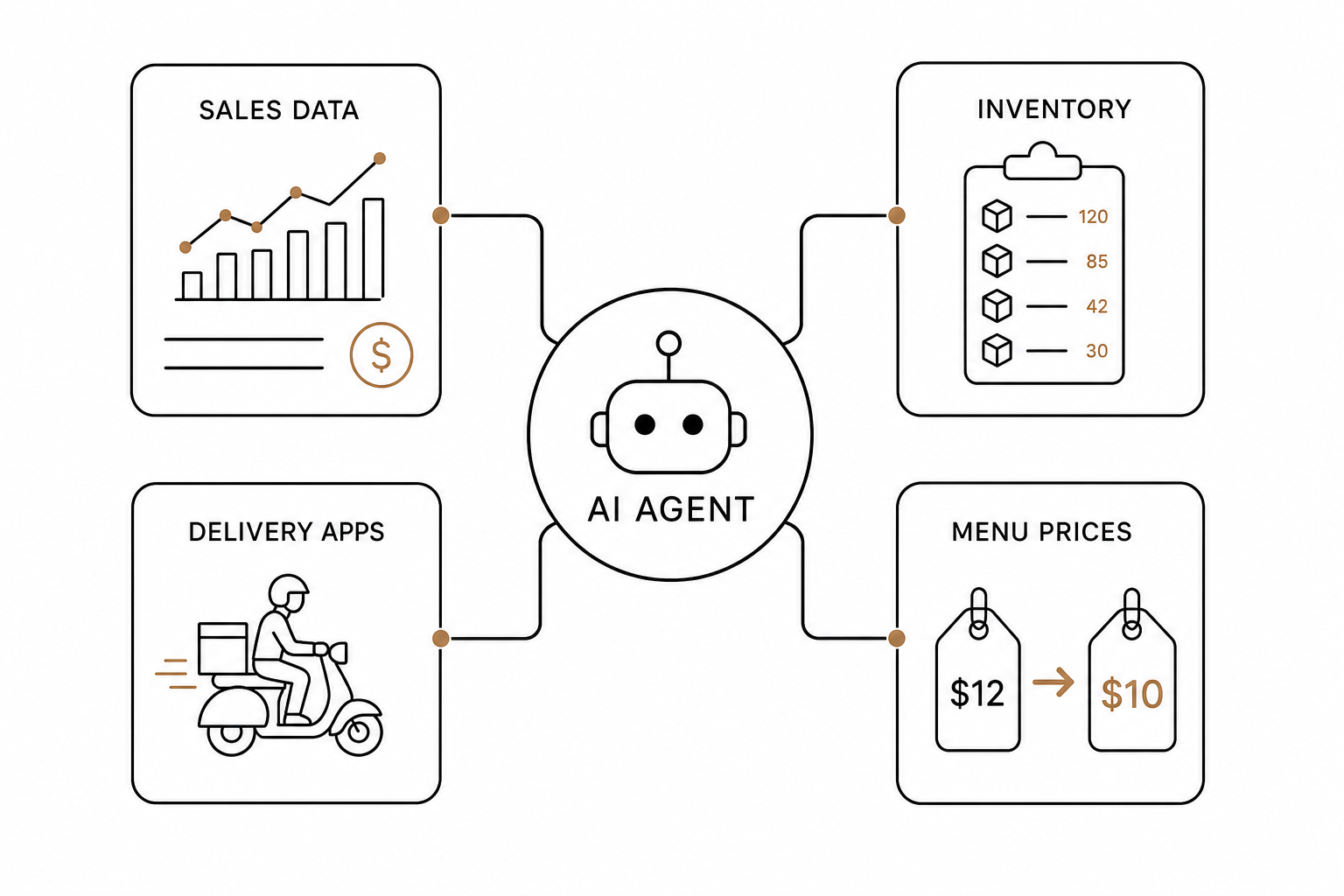
Instead of navigating endless back-office dashboards, you can manage your pricing strategy via natural dialogue:
"Analyze our Tuesday afternoon sales. If transaction volume is 20% below our monthly average, apply a 10% discount on our high-margin appetizers across our POS and all third-party delivery integrations."
The AI agent retrieves your real-time sales data, determines the best items to discount based on profit contribution, and executes the update seamlessly.
Implementing AI-driven pricing in your restaurant
If you want to start leveraging AI to protect your margins, follow these foundational steps:
- Integrate your tech stack first: Dynamic pricing requires real-time data flow. Your POS, inventory tracking, and delivery channels must communicate seamlessly. Using an integrated platform like Spindl ensures your order taking, delivery apps, and point-of-sale systems operate from a single, unified device. This native integration allows AI tools to analyze your true cost of goods sold (COGS) and adjust prices accurately.
- Focus on contribution margin: Never change prices based on guesswork. Analyze your menu items based on popularity and profit. Segment your menu into high-volume profit drivers and low-margin items. Focus your dynamic pricing adjustments on high-margin items where you have the flexibility to offer attractive discounts without hurting your bottom line.
- Start with off-peak discounts: Build trust with your customers by using dynamic pricing exclusively for off-peak discounting first. Introduce midday specials, late-night value deals, or rainy-day promotions. Once your guests associate dynamic shifts with savings, you can carefully optimize your peak-hour pricing strategies.
- Let AI handle the heavy lifting: By connecting an AI agent to your point-of-sale through AgenticPOS, you can automate the painful manual tasks of price management, freeing up your team to focus on the dining room floor.
Managing a restaurant's profit margins in an inflationary environment requires agility, not static, rigid pricing models. By transitioning from manual adjustments to an automated, AI-driven workflow, you can capture off-peak demand and protect your bottom line without alienating your customer base. Explore how to safely turn your existing POS into an agentic system by visiting the AgenticPOS blog to learn more.